Ingredients · PROFESSIONAL GUIDE
Prickly Pear Seed Oil: Why It’s One of the Most Expensive Cosmetic Oils
Why prickly pear seed oil is one of the most expensive cosmetic oils, and whether the price fits your formulation.
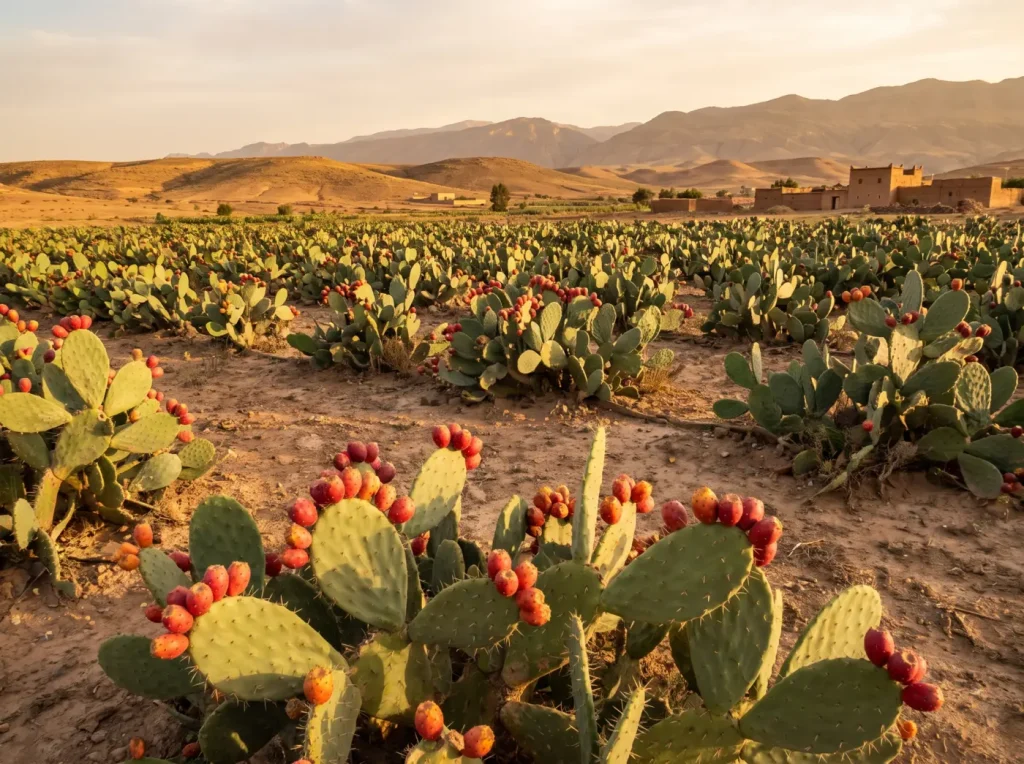
Prickly pear seed oil regularly tops lists of the most expensive cosmetic oils in the world, and buyers encountering it for the first time often want to understand why — and whether the price is justified for their formulation. Here’s a practical look.
Why it costs so much to produce
The economics are simple once you see the numbers: prickly pear seeds are tiny, and the fruit itself contains very little oil by weight. Producing a single liter of oil requires processing a very large quantity of fruit, almost entirely by manual labor at the harvesting and seed-extraction stages, since the process doesn’t scale down easily to mechanization the way larger oilseeds do. That labor intensity, not marketing, is the primary driver of the price.
What’s actually in it
Prickly pear seed oil is notable for a high concentration of vitamin E and essential fatty acids relative to many other cosmetic oils, along with sterols that contribute to its reputation as a skin-conditioning active. Its light, fast-absorbing texture is also a practical selling point — it doesn’t leave the heavy residue some richer facial oils do.
Where it’s typically used
Given its cost, prickly pear seed oil is almost always formulated as a featured active in a facial oil or serum rather than as a bulk carrier oil for body products — it’s positioned and priced as a premium ingredient, not a commodity one. Brands often name it explicitly on packaging and in marketing precisely because of its recognized value and rarity.
Questions worth asking a supplier
Because of the price point, verifying authenticity matters more here than with lower-cost oils: ask for a Certificate of Analysis, ask whether the oil is 100% prickly pear seed oil or blended with a carrier oil (a common cost-reduction practice that should be disclosed, not discovered later), and confirm the extraction method, since cold-pressing is the standard expected by buyers formulating premium products.
Sourcing considerations
Morocco is one of the main global sources of prickly pear seed oil, produced largely by women’s agricultural cooperatives working with the Opuntia ficus-indica cactus that grows extensively in the region. Sourcing directly or through fewer intermediaries can help with both cost control and the traceability documentation premium-positioned brands increasingly need to substantiate their ingredient story.
Whitwest Groupe sources and supplies Moroccan prickly pear seed oil for finished-product and bulk cosmetic use. See our prickly pear seed oil product page, or get in touch to discuss a sourcing brief.
GO FURTHER
From guide to project.
Browse the related products and the information you need to prepare your request to our team.
Prickly Pear Seed Oil