Ingredients · PROFESSIONAL GUIDE
Moroccan Argan Oil: Grades, Extraction Methods & Cosmetic Uses
Grades, extraction methods and intended uses: what really differentiates one argan oil from another when you buy in volume.
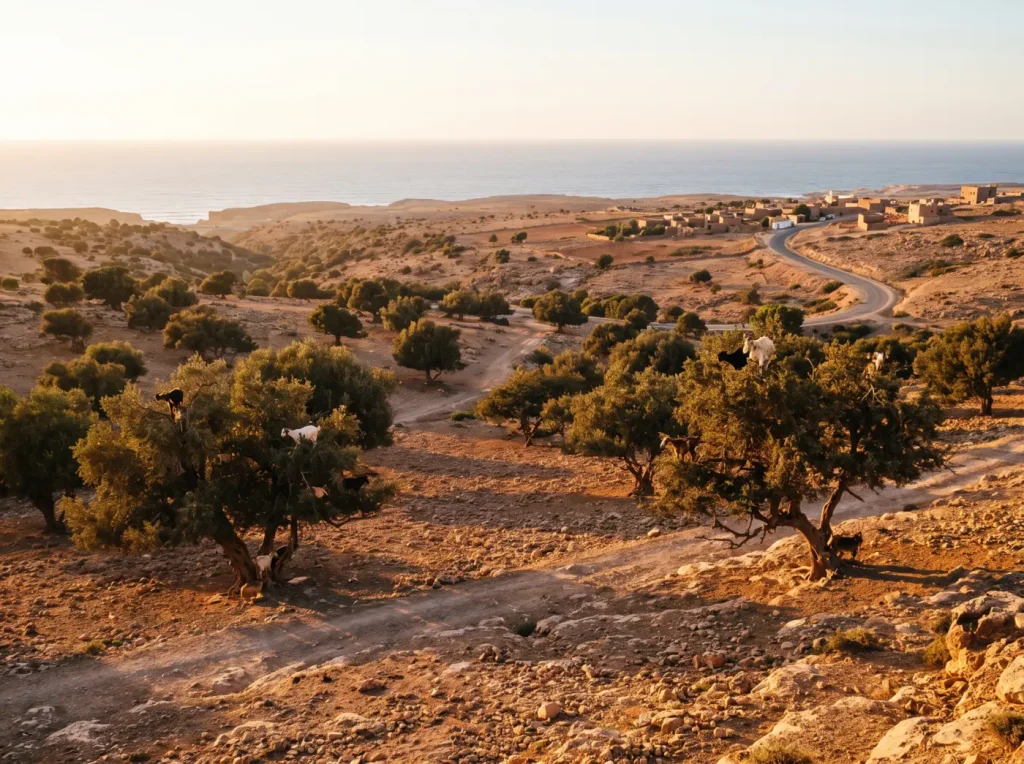
Argan oil is one of the most requested ingredients in cosmetic sourcing briefs, and also one of the most misunderstood. Not all argan oil is the same, and the differences — grade, extraction method, and intended use — matter a lot once you’re formulating or buying in volume. Here’s a practical overview.
Cosmetic grade vs. food grade
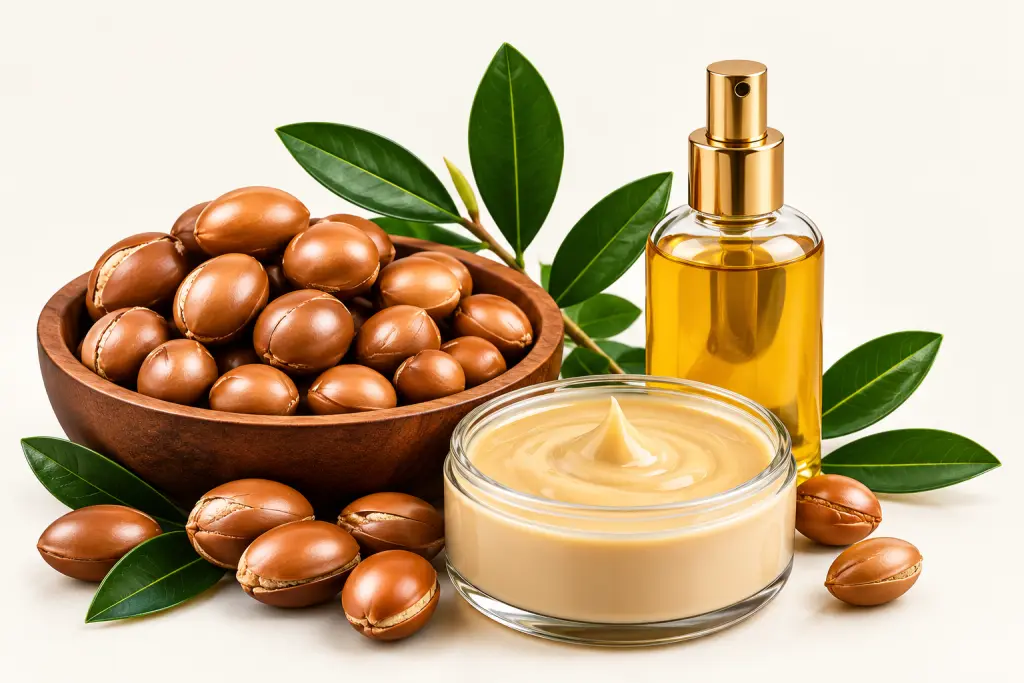
Argan oil sold for cosmetic use and argan oil sold for culinary use are processed differently. Culinary argan oil is typically made from lightly roasted kernels, which gives it a nutty aroma and darker color — desirable at the table, less so on skin or hair, where a lighter scent and color are usually preferred. Cosmetic-grade argan oil is generally pressed from unroasted kernels, producing a lighter oil better suited to skincare and haircare formulations.
Extraction method: cold-pressed vs. solvent-extracted
Cold-pressing — mechanical extraction without heat or chemical solvents — is the method most associated with higher-quality argan oil, and the one most cosmetic buyers specifically ask for. It preserves more of the oil’s natural fatty acid and vitamin E content compared to solvent extraction, which is cheaper but strips more of what makes argan oil valuable as a cosmetic active in the first place.
What “100% pure” should actually mean
A “100% pure” claim should mean the oil is not diluted or blended with cheaper carrier oils — a real risk in a commodity as sought-after as argan oil. If you’re buying in bulk, ask for a Certificate of Analysis and, where relevant, a fatty acid profile, rather than relying on the label claim alone.
Common cosmetic applications
Argan oil’s fatty acid and vitamin E profile makes it a common base or active ingredient across several product categories: facial oils and serums, body oils and lotions, hair oils and conditioning treatments, and as a functional ingredient blended into shower gels and soaps. The right grade and extraction method depend on which of these you’re formulating for — a leave-on facial serum has different purity expectations than a rinse-off body wash.
Sourcing considerations for buyers
Morocco’s Souss-Massa region is the traditional heartland of argan oil production, and sourcing closer to that origin can simplify traceability and reduce the number of intermediaries between the cooperative or press and your finished product. Whatever the source, ask specifically about extraction method, grade, and available documentation before finalizing a bulk order.
Whitwest Groupe sources and supplies Moroccan argan oil for both finished-product and bulk cosmetic use. See our argan oil product page for supply options, or get in touch to discuss a bulk sourcing brief.
GO FURTHER
From guide to project.
Browse the related products and the information you need to prepare your request to our team.
100% Pure Moroccan Argan Oil