Ingredients · PROFESSIONAL GUIDE
Moroccan Rose Beauty Oil: What Makes It a Sought-After Cosmetic Ingredient
Rosa damascena from the Dades Valley: the basics buyers should know before sourcing rose-based cosmetic ingredients.
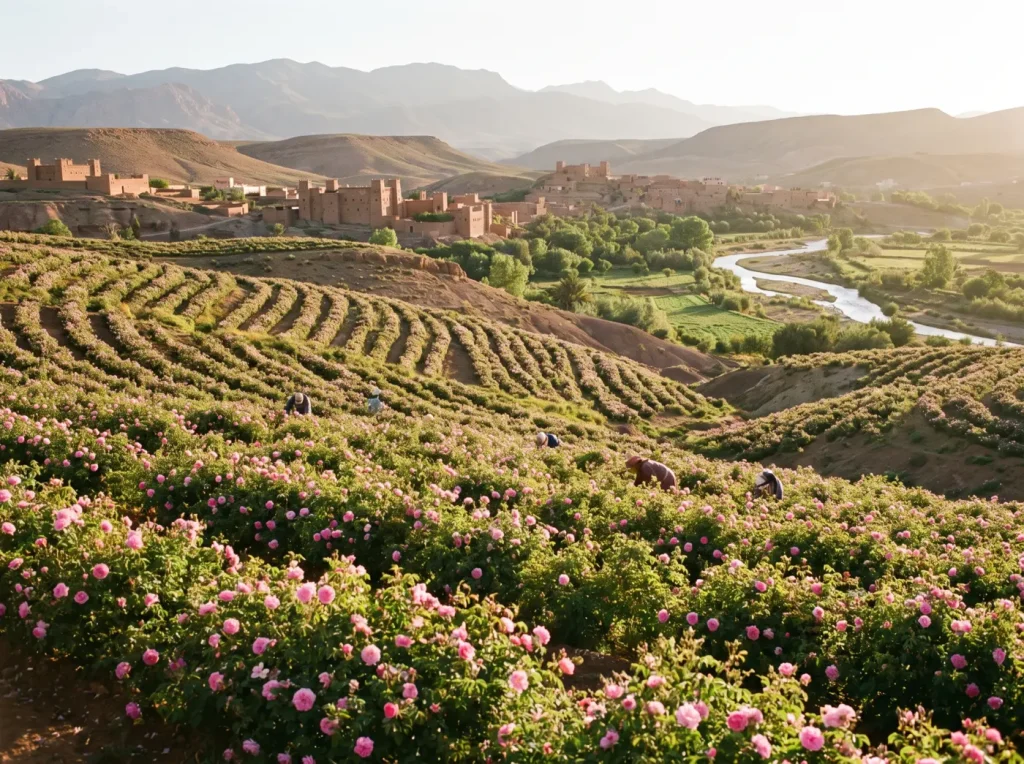
Moroccan rose is closely tied to one specific place: the Dades Valley, often called the “Valley of Roses,” where the Rosa damascena variety is cultivated and harvested for a few short weeks each spring. That narrow harvest window is part of why rose-based cosmetic ingredients carry a premium position, and why buyers should understand a few basics before sourcing them.
Rose water vs. rose oil vs. rose beauty oil — not the same thing
These terms get used loosely, but they describe different products. Rose water (hydrosol) is the aqueous byproduct of steam-distilling rose petals — light, mostly water, and commonly used as a toner or facial mist. Rose oil (otto) is the concentrated essential oil separated during that same distillation — extremely potent, used in tiny quantities. A rose beauty oil, by contrast, is typically a carrier oil (such as argan or another botanical oil) infused or blended with rose extract or rose oil, designed to be used generously on skin rather than in drops. Confusing these three when sourcing can mean ordering the wrong product entirely.
Why the harvest timing matters
Damask roses are typically hand-picked early in the morning, before the heat of the day causes the petals’ essential oil content to degrade, and processing usually needs to happen the same day. This narrow harvest and processing window is a real production constraint, not a marketing story — it directly affects both availability and the seasonal timing of raw material sourcing.
What to check when sourcing
Ask specifically which of the three products above you’re being quoted — rose water, rose essential oil, or a rose-infused beauty oil — since pricing and use cases differ enormously between them. For a beauty oil specifically, ask what the base carrier oil is and what percentage or method of rose infusion is used, since “rose oil” on a label can describe a wide range of actual rose content.
Common cosmetic applications
Rose-based ingredients are used across facial care (toners, serums, beauty oils), body care, and as a signature scent note in soap and hammam-ritual products, often positioned as a finishing or luxury touch within a broader product range rather than the primary functional ingredient.
Whitwest Groupe sources and supplies Moroccan rose beauty oil for finished-product and private-label use. See our rose beauty oil product page, or get in touch to discuss a sourcing brief.
GO FURTHER
From guide to project.
Browse the related products and the information you need to prepare your request to our team.
Rose Beauty Oil