Private label · PROFESSIONAL GUIDE
How to Choose a Private Label Cosmetics Manufacturer
A practical checklist for evaluating a private label manufacturer: product quality, delivery reliability and what you can genuinely claim about your brand.
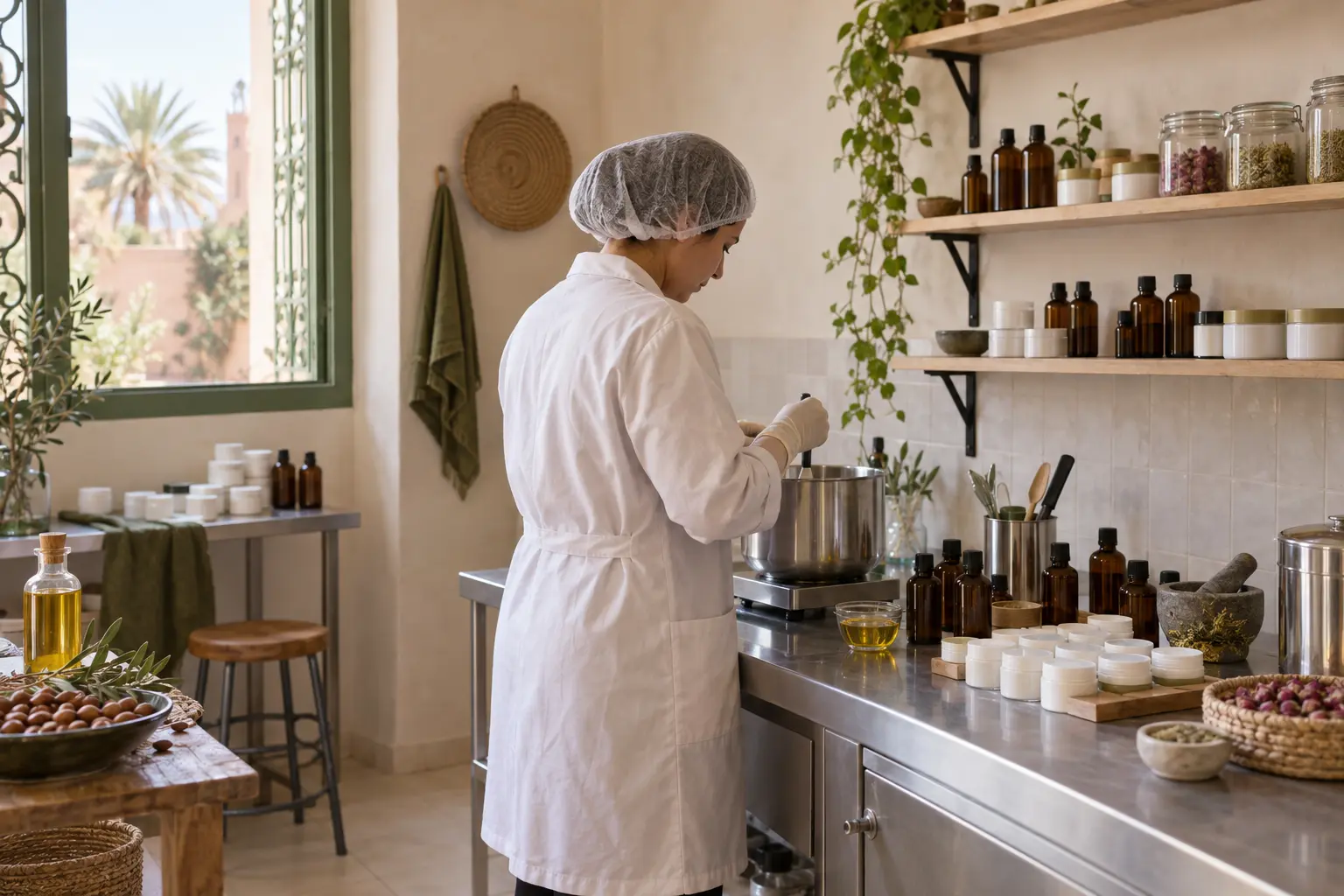
Launching a cosmetics brand almost always starts with the same question: who is going to manufacture it? Private label lets you put your own name on a formula without building a factory, but the manufacturer you choose determines everything downstream — product quality, delivery reliability, and how much you can genuinely claim about your brand. Here is a practical checklist for evaluating one.
Ask for real documentation, not just a badge on a website
Certifications and authorizations matter, but a logo on a homepage proves nothing on its own. Before committing, ask the manufacturer to send the actual authorization or certificate, including its reference number and issuing body, and check that the scope matches what you are ordering — an authorization covering one product category does not automatically cover another.
Understand minimum order quantities before you fall in love with a formula
MOQs vary enormously between manufacturers and even between products from the same manufacturer, depending on packaging format and raw material sourcing. Ask early, and ask specifically: a “typical” MOQ figure on a website is a starting point for a conversation, not a guarantee for your exact product and packaging combination.
Look at ingredient sourcing, not just the finished formula
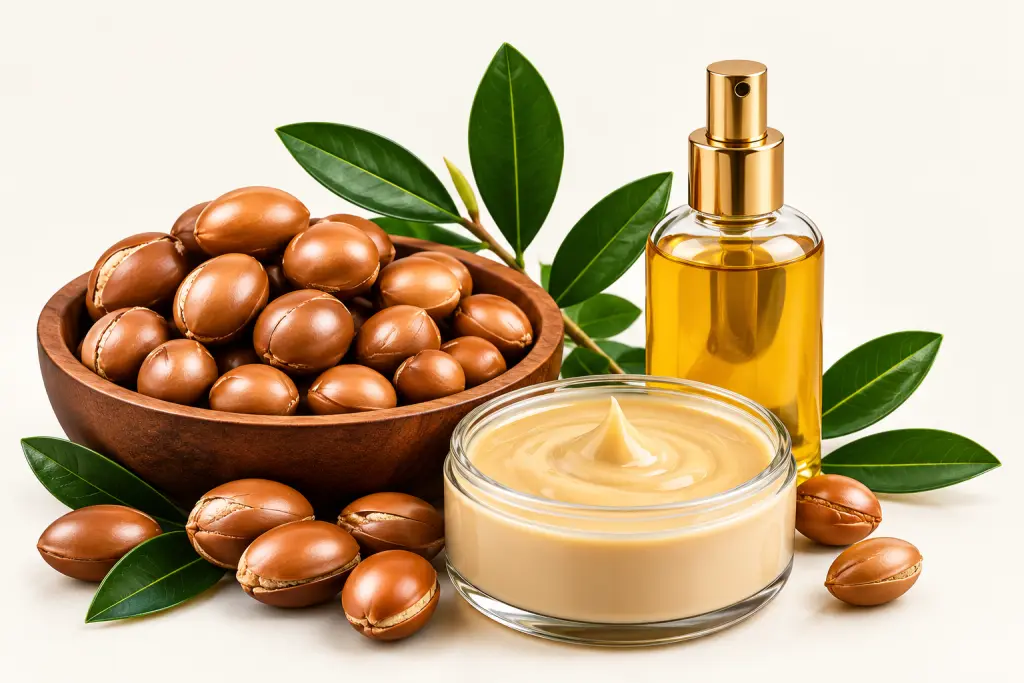
Where a manufacturer sources its raw materials affects both cost and story. Morocco is a significant global source for several cosmetic actives — argan oil, ghassoul clay, rose water, prickly pear seed oil — and a manufacturer working close to that supply chain can often be more responsive on sourcing questions than one working through several layers of importers.
Clarify what “private label” actually includes
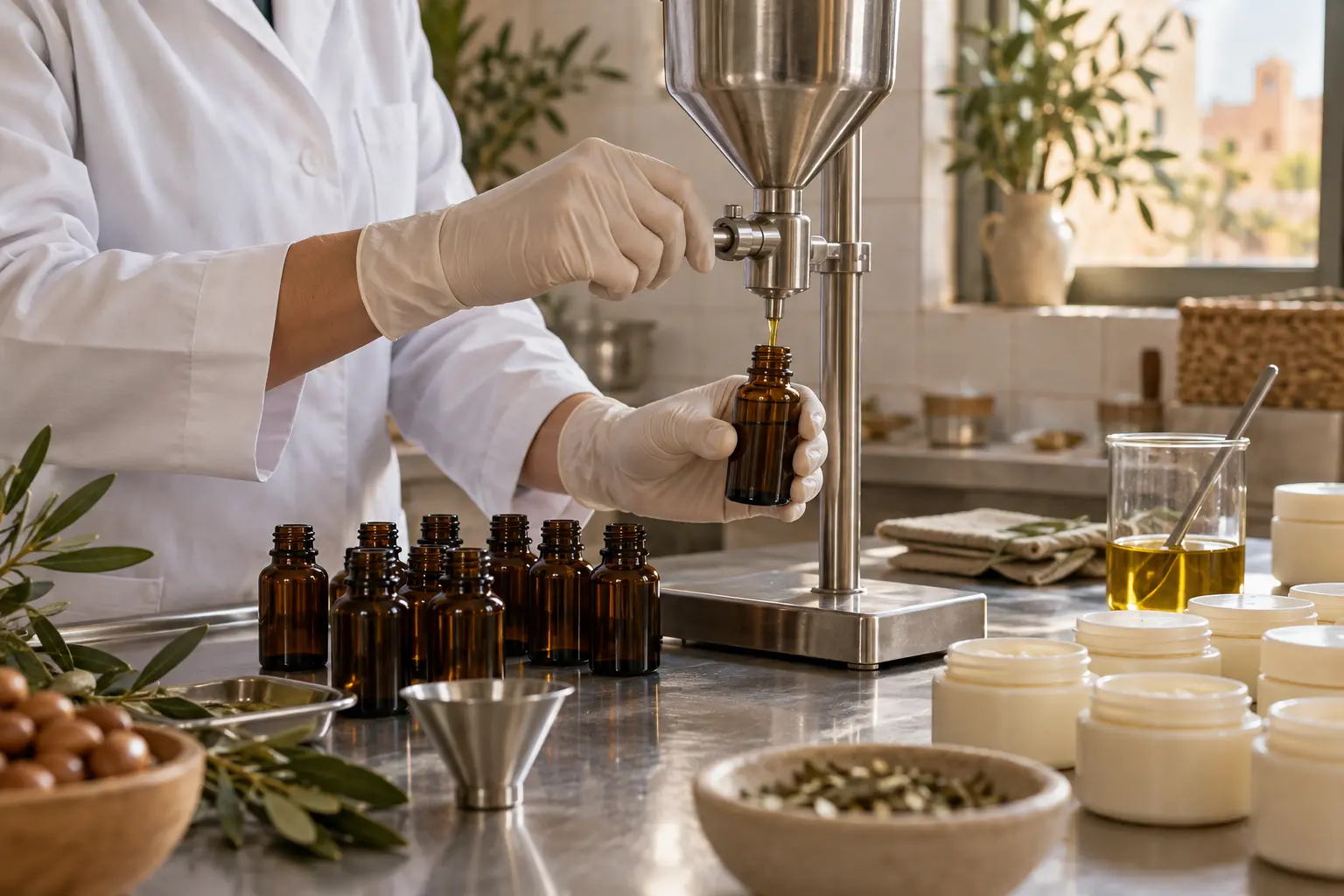
Private label can mean anything from picking an existing formula off a shelf to developing something exclusive to your brand. Ask explicitly what level of formulation input you will have, whether the base formula can be adjusted, and whether packaging, labeling, and artwork are handled in-house or outsourced.
Request the quality and traceability documents you will actually need
Depending on your target market, you may need a Certificate of Analysis, batch traceability records, or ingredient declarations (INCI lists) for regulatory filing. Confirm which documents the manufacturer can provide as standard versus on request, and get this in writing before your first order, not after.
Plan the conversation, not just the order
The manufacturers worth working with will ask you as many questions as you ask them — about your target market, your packaging preferences, and your expected volumes. A one-line quote with no follow-up questions is often a sign of a transactional relationship, not a manufacturing partner.
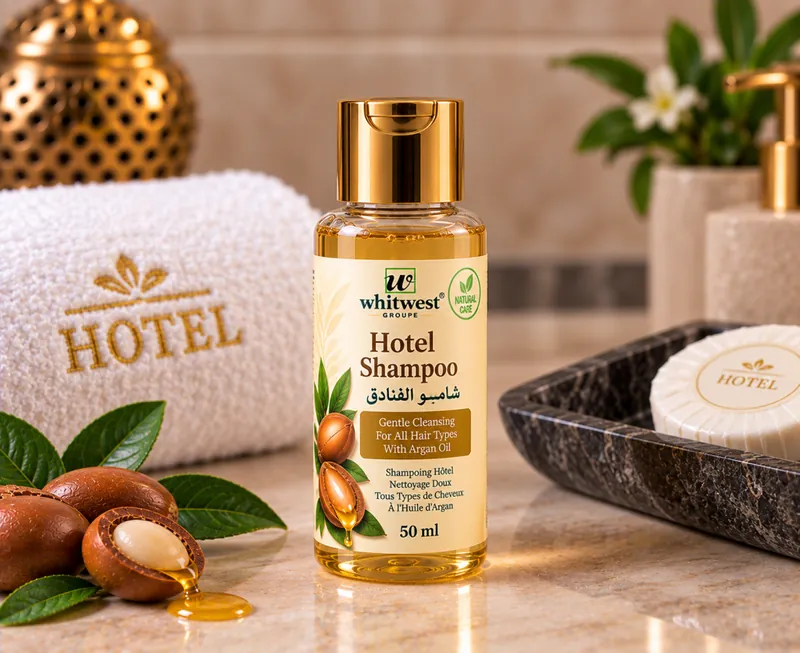
Whitwest Groupe works with brands, distributors, and hospitality buyers on private label, wholesale, and bulk supply of Moroccan-sourced cosmetics. You can read more about our approach on the private label page, or get in touch to discuss a specific project.
GO FURTHER
From guide to project.
Browse the related products and the information you need to prepare your request to our team.
Private Label